Hole In the Wall (Playford) – Cello & Chords (PDF) – D major – Baroque Dance
Hole In the Wall
Key: D major
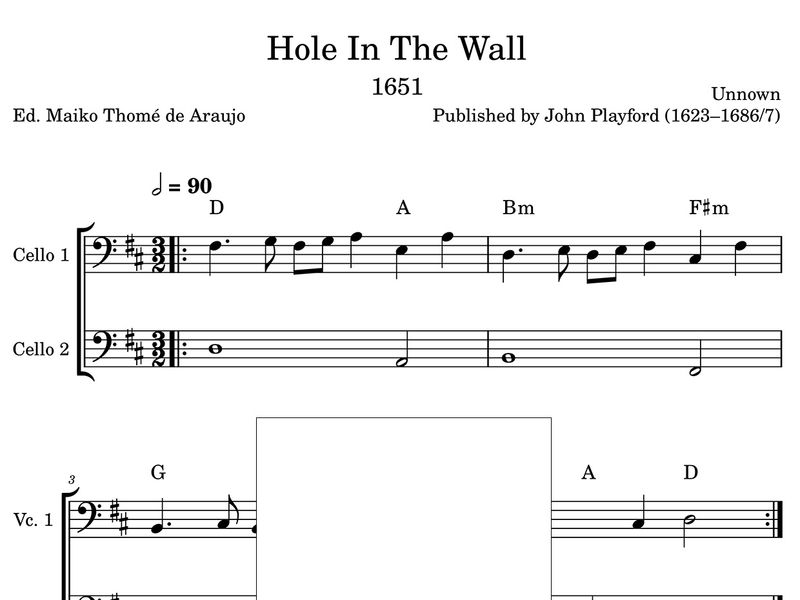
Arrangement: Cello & Chords (lead sheet) (also works for other melody instruments)
Composer / Source: J. Playford (?)
Period: Baroque (17th century)
Region / Culture: English
Type: Dance
Format: Digital download (PDF) — 1 file (2.0MB)
About this tune
“Hole in the Wall” is a classic English country dance from the late 17th-century Playford-era repertory, documented in dance resources that trace it back to Playford/Playford-related publications around the end of the 1600s.
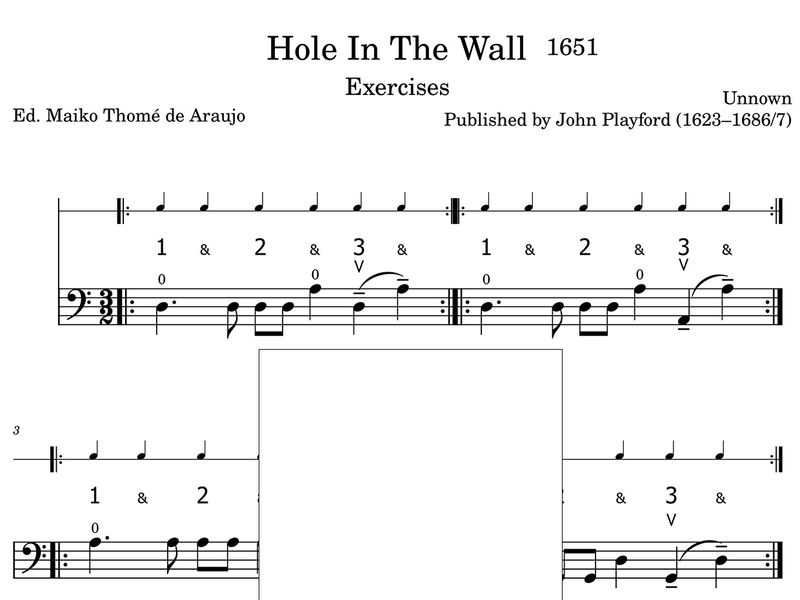
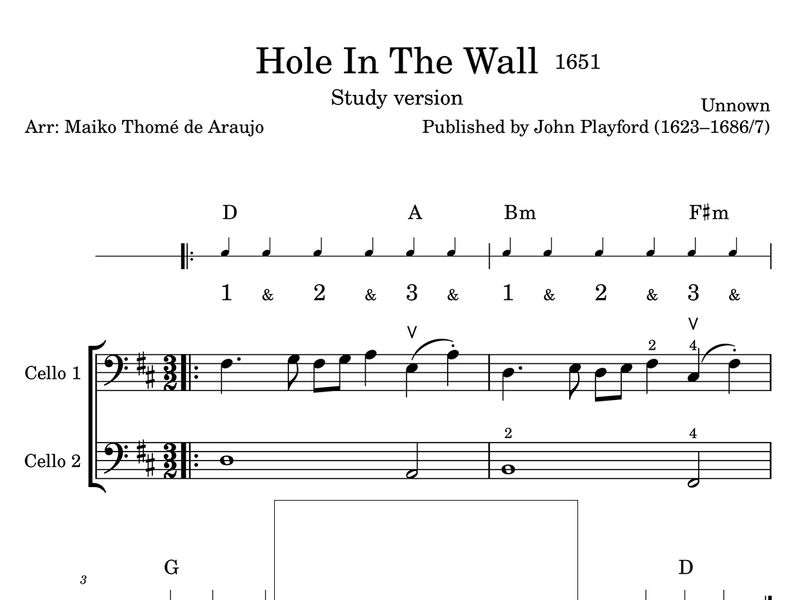
In practice, that tradition shaped tunes to work for dancers: clear musical “sentences,” strong pulse, and repeat-friendly design. That’s exactly why this melody is still so useful today—whether you’re playing it for an actual dance, building an early-music/folk crossover set, or using it as an ensemble study for timing and articulation.
Because you have chord symbols, this becomes more than a single-line tune: it’s an easy framework for arranging accompaniment textures—ranging from simple drones and open fifths (very convincing for early dance color) to light broken-chord guitar/keyboard patterns for a brighter folk feel.
Why “Cello & Chords” works so well
- The cello can deliver the melody with a warm, vocal character, which fits Baroque/folk dance tunes beautifully—especially when phrased in clear 4–8 bar arcs.
- Chord symbols make accompaniment immediate (guitar/keyboard/bouzouki/harp), and they also help you phrase the line with clear harmonic direction.
- This lead-sheet format is flexible: keep the chords and swap the melody line to another instrument if needed, without changing the harmonic roadmap.
Performance tips
Keep articulation dance-like and buoyant (clear attacks, not harsh). Let the chord changes guide longer phrase arcs rather than bar-by-bar playing. If you repeat sections, add contrast with dynamics or accompaniment texture while keeping the pulse steady.
What you receive
- 1 PDF file (2.0MB) as listed on the product page.